






You’ll find powerful insights into addiction recovery through films like “28 Days,” which honestly portrays withdrawal symptoms and therapeutic community support, and “Flight,” where Denzel Washington’s character confronts denial despite professional success. “Rocketman” chronicles Elton John’s transformation through rehab and sustained sobriety since 1990, while “The Fighter” captures Christian Bale’s Oscar-winning portrayal of crack addiction’s impact on family dynamics. These narratives demonstrate that recovery requires confronting painful truths, building supportive relationships, and developing emotional resilience, themes explored throughout each film’s unique perspective on transformation.
28 Days (2000): Finding Community and Self-Realization in Rehab

The film honestly portrays withdrawal symptoms, emotional flashbacks, and the turning point when Gwen risks harm retrieving discarded pills, finally recognizing her condition’s gravity. You’ll see how the therapeutic community, led by recovering director Cornell, creates space for confronting denial. Gwen’s ongoing personal inventory helps her identify self-destructive patterns, reject enabling relationships, and choose sobriety. Sandra Bullock brings depth to protagonist Gwen Cummings as she navigates the complexities of admitting her alcoholism. The tragedy of Andrea’s overdose death serves as a devastating catalyst that solidifies Gwen’s commitment to both her sobriety and rebuilding her relationship with her sister. Viggo Mortensen’s portrayal adds another layer of authenticity to the rehab environment, showing how fellow patients support each other through their shared struggles. This realistic portrayal emphasizes recovery as continuous commitment rather than single event.
Flight (2012): Confronting Denial and Professional Downfall
While *28 Days* explored recovery within the supportive structure of rehab, *Flight* (2012) examines what happens when professional success masks severe addiction and denial runs deep. You’ll watch veteran pilot Whip Whitaker perform a miraculous crash-landing that saves 96 lives, then face investigation revealing a blood alcohol level three times the legal limit and cocaine in his system. The film powerfully illustrates how coping with guilt becomes impossible when denial persists, as Whip sabotages sobriety attempts while his career crumbles. Director Robert Zemeckis loosely based the screenplay on Alaska Airlines Flight 261, which crashed in 2000, lending the film’s dramatic aviation sequences an unsettling authenticity. You’re confronted with complex questions about traversing professional ethics: does exceptional skill excuse impaired judgment? Whitaker’s addiction began long before the crash; he spent the night before SouthJet flight 227 drinking and using cocaine, then discreetly mixed vodka into his orange juice during the flight itself. The crisis began when mechanical malfunction triggered an uncontrollable nosedive, forcing Whip to invert the plane to halt the descent before righting it for the crash-landing. His climactic confession at the NTSB hearing, choosing honesty over self-preservation, demonstrates that accountability, though costly, offers the only path toward genuine recovery and restored integrity.
Rocketman (2019): Elton John’s Journey Through Substance Abuse to Transformation

You’ll see how parental neglect, his father’s refusal to hug him, his mother’s emotional coldness, created vulnerabilities that later manifested as alcoholism, cocaine addiction, bulimia, and compulsive behaviors. As fame intensified, so did his isolation and self-destruction, straining friendships and destabilizing his career.
The film frames rehab group therapy as his turning point, where he confronts childhood trauma and develops emotional resilience. The movie uses AA meetings as a framing device to explore how he systematically addresses each addiction. The film’s honest portrayal strips away outrageous costumes and personas, revealing the vulnerable person beneath the performer’s glittering facade. Bernie Taupin’s nonjudgmental support proves vital.
Since 1990, Elton’s sustained sobriety demonstrates that professional recovery and creative renewal can coexist; he’s donated millions to HIV/AIDS causes while publicly reducing addiction stigma. His songwriting speed remained a remarkable asset throughout recovery, allowing him to compose music in minutes and maintain his prolific output.
The Fighter (2010): Battling Crack Cocaine Addiction Alongside Boxing Dreams
You’ll find *The Fighter* explores addiction through the intertwined lives of two brothers Dicky Eklund’s crack cocaine dependency threatens not only his own comeback but also his half-brother Micky Ward’s boxing career. The film demonstrates how one person’s substance abuse creates a destructive ripple effect through family relationships, forcing difficult choices between loyalty and self-preservation. What Dicky believes is a documentary about his comeback becomes a chronicle of his addiction, revealing the painful gap between self-perception and reality. Set in the working-class community of Lowell, Massachusetts, the story authentically captures the environmental struggles that both enable and complicate the path to recovery. When Dicky lands in jail for extortion, the film shifts to show how his absence forces Micky to break free from destructive family dynamics and pursue his own path with the support of his father George and girlfriend Charlene. Christian Bale’s Oscar-winning portrayal captures addiction’s raw reality while showing that recovery requires both personal commitment and the courage to rebuild broken trust.
Dual Struggles, Shared Redemption
| Addiction’s Impact | Recovery’s Results |
|---|---|
| Missed training sessions | Strategic fight guidance |
| Career humiliation | Title victory support |
| Family fracture | Restored partnership |
| Community disappointment | Renewed respect |
Christian Bale’s transformation captures addiction’s physical toll, while the narrative emphasizes restoration through mutual support, demonstrating that redemption often requires confronting harsh truths and recommitting to those you’ve failed. The film’s portrayal draws from the 1995 HBO documentary “High on Crack Street: Lost Lives in Lowell,” which originally documented Eklund’s struggles with crack cocaine. Director David O. Russell’s subtle execution gives the impression of a documentary-type movie rather than a conventional sports drama.
Family Dynamics in Recovery
When Dicky enters prison and achieves sobriety, mutual accountability becomes possible. You’ll see the family recalibrate their roles: Dicky transforms into a reliable trainer, while Micky claims his autonomy. This Lowell, Massachusetts story authentically portrays working-class family resilience, showing that recovery requires honest self-assessment, conditional support, and respect for each person’s individual growth within the collective unit. The film illustrates how leaving home and family serves as an essential rite of passage, allowing Micky to determine his own identity before returning with newfound independence. The film’s critically acclaimed performances earned Christian Bale and Melissa Leo Academy Awards for their raw portrayals of addiction’s impact on family bonds.
Oscar-Winning Authentic Portrayal
Christian Bale’s Academy Award-winning portrayal of Dicky Eklund captures crack cocaine addiction with unflinching precision, showing you the physical deterioration and psychological chaos that substance abuse inflicts. The film’s documentary-style segments mirror HBO’s “Crack in America,” revealing how addiction derails both personal relationships and professional aspirations. You’ll witness Dicky’s journey from boxing hero to imprisoned addict, then through recovery supported by trauma-informed care principles and family involvement. Melissa Leo’s Oscar-winning performance as Alice Ward highlights the complex family dynamics that both enable and ultimately support healing. The Fighter demonstrates how community-driven recovery programs, combined with authentic accountability, can restore lives, Dicky’s sobriety becomes instrumental to his brother Micky’s championship victory, proving recovery enables renewed purpose.
A Star Is Born (2018): Fame, Co-Dependency, and the Need for Support
In *A Star Is Born* (2018), you’ll witness how fame’s relentless pressures can intensify addiction while allowing destructive behaviors to hide behind public success. The film portrays the painful reality of co-dependency as Ally struggles to support Jackson Maine while protecting herself from the emotional harm his addiction causes. You’ll see how celebrity status, untreated mental health issues, and substance abuse create a devastating cycle that affects both the person struggling and everyone who loves them.
Addiction Amid Celebrity Spotlight
Jackson’s story exposes critical truths about addiction and fame:
- Untreated trauma festers in silence – his emotional wounds remain unaddressed while expectations to perform never cease
- Mental health crises intertwine with substance abuse – over 54% of those in addiction treatment face co-occurring disorders
- Loved ones experience profound helplessness – Ally’s heartbreak reminds you that you can’t control another’s addiction
Cooper’s personal recovery journey brings raw authenticity to this devastating yet essential portrayal.
Co-Dependency’s Destructive Emotional Toll
While Ally’s devotion to Jackson appears rooted in love, the film reveals how co-dependency transforms support into self-destruction. Her enabling tactics, cancelling tours, apologizing for his behavior, covering relapses, erode boundaries and autonomy. This self sacrificing behavior extracts a devastating price: chronic stress, neglected self-care, and distorted self-worth tied to “saving” him.
| Co-Dependency Pattern | Emotional Consequence |
|---|---|
| Caretaker role replacement | Guilt and shame |
| Enabling destructive behaviors | Anger and resentment |
| Boundary erosion | Fear of abandonment |
| Identity sacrifice | Isolation and hopelessness |
You’ll notice Ally assumes the same dysfunctional role Jackson’s brother once held, perpetuating intergenerational patterns. The film challenges cultural narratives equating sacrificial love with passion, demonstrating how co-dependency impedes both partners’ healing and ultimately deepens suffering.
The Anonymous People (2013): Breaking Stigma Through Real Recovery Stories
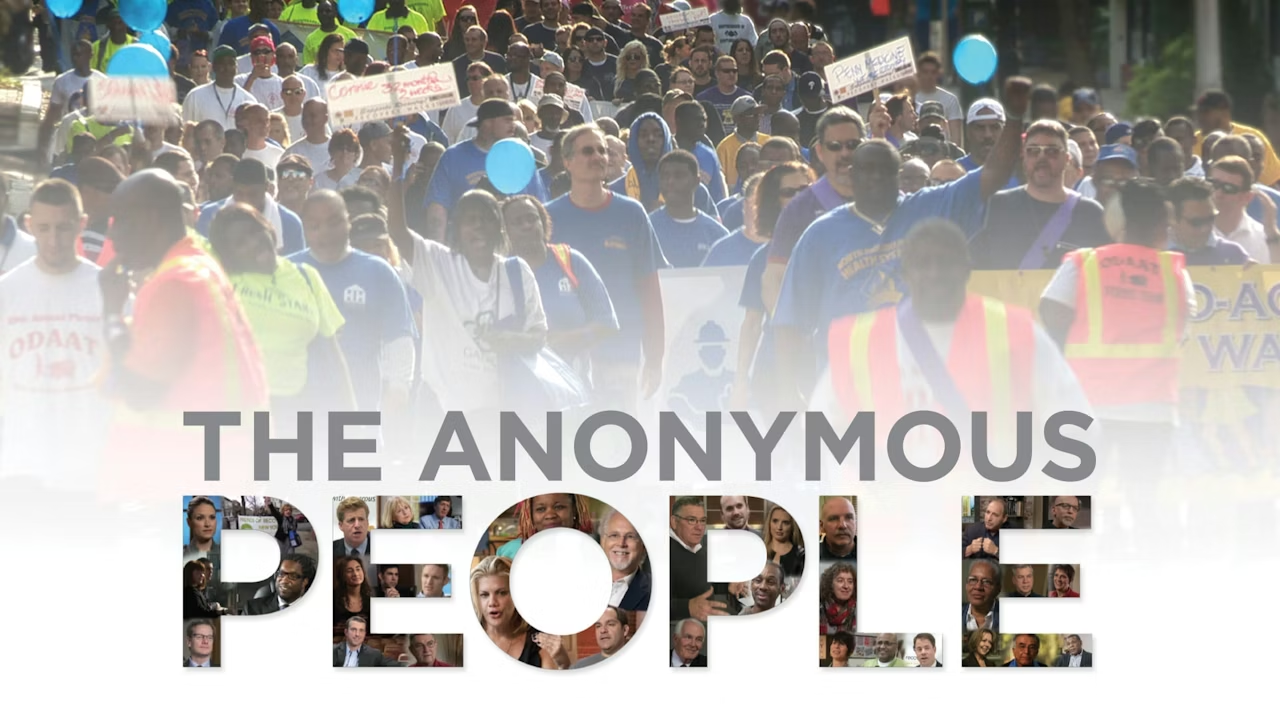
The film advocates for reducing anonymity and advancing public recovery campaigns to transform both opinion and policy. You’ll witness how shame can be as deadly as the disease itself, and why visibility matters in saving lives.
Key takeaways that inspire action:
- Recovery rallies mobilize communities, giving millions a collective voice
- Evidence-based treatment saves lives more effectively than incarceration
- Your story could help someone else seek help
Beautiful Boy (2018): A Parent’s Perspective on Relapse and Hope
The gripping emotional arc follows David’s journey from enabling to detachment, supported by Al-Anon principles. You’ll see recovery depicted realistically: not as a linear triumph but as fragile, ongoing work requiring treatment, peer support, and family involvement. The closing credits reveal Nic achieved eight years of sobriety, offering hope tempered with vigilance.
Ben Is Back (2018): 24 Hours That Reveal the Reality of Recovery
The film reveals addiction’s harsh truths:
- Early recovery isn’t linear; relapse risk persists despite months of treatment
- Family members carry invisible scars, siblings express warranted fear alongside cautious hope
- One crisis can unravel everything, Ben’s overdose shows how proximity to triggers threatens survival
You’ll recognize recovery requires thorough, wide-ranging support beyond willpower alone.
Don’t Worry, He Won’t Get Far on Foot (2018): Art Therapy and Lifelong Sobriety
The film illustrates art therapy’s evidence-based benefits: stress hormone reduction up to 75%, improved emotional regulation, and decreased denial. Artistic self-expression provided Callahan with non-verbal communication channels vital during early sobriety, when verbal processing often proves difficult.
His journey reveals how creativity becomes one of the most valuable lifelong sobriety tools, offering purpose, structure, and healthy coping mechanisms that replace substance use. You’ll see art therapy’s integrative power alongside twelve-step work, demonstrating sustainable recovery through self-reflection and emotional management.
Permanent Midnight (1998): Raw Heroin Addiction and Career Consequences
The film demonstrates writing as catharsis, Stahl’s memoir itself became his reckoning with past destruction:
- Drug use during his daughter’s birth reveals addiction’s grip on sacred moments
- Recurring relapses show recovery isn’t linear or clean-cut
- Post-recovery consequences include liver damage and ongoing public accountability
This unflinching narrative refuses to glamorize addiction, instead offering validation through honest representation.
Frequently Asked Questions
Are These Films Suitable for People Currently in Early Recovery?
If you’re in early recovery, approach these films carefully. Graphic content and relapse scenes can trigger cravings or retraumatize you, potentially undermining your emotional resilience. However, recovery-focused narratives emphasizing hope and community support may aid your personal growth when you’re ready. It’s best to consult your therapist or counselor first; they’ll help you assess your individual vulnerability. Consider watching in supportive settings where you can process difficult emotions safely and immediately access help if needed.
Can Watching Addiction Movies Trigger Relapse in Recovering Individuals?
Yes, watching addiction movies can trigger relapse in recovering individuals. You face potential for vicarious cravings when exposed to drug-related cues on screen, as they may activate neural pathways linked to past use. There’s also risk of reliving past trauma through graphic portrayals. Your susceptibility depends on your recovery stage, mental health status, and coping skills. If you’re in early recovery, consider watching films with clinical supervision or peer support to process emotions safely.
Which Films Are Most Recommended by Addiction Counselors for Therapy?
Addiction counselors most recommend Clean and Sober, 28 Days, and Beautiful Boy for therapy sessions. You’ll find these films align with evidence-based practices by depicting realistic denial, acceptance, and relapse cycles. They support trauma-informed approaches through compassionate storytelling about family dynamics and recovery challenges. Counselors also use Flight and When a Man Loves a Woman to explore accountability and relationship repair. These selections help you process your own experiences while normalizing the non-linear nature of recovery.
Do Any of These Movies Show Medication-Assisted Treatment Approaches?
Yes, several films authentically portray medication-assisted treatment approaches. Four Good Days prominently features Naltrexone injection as central to recovery, while Gia depicts methadone maintenance therapy. Recent 2025 releases show extensive treatment centers integrating MAT with counseling, reflecting evidence-based practices. You’ll also notice harm reduction strategies woven throughout documentaries emphasizing stabilization over abstinence-only models. These portrayals help normalize MAT as legitimate medical care, potentially reducing stigma you or loved ones might face when considering these proven treatment options.
Are There Content Warnings Families Should Know Before Watching Together?
Yes, you’ll want to review content advisories carefully before family viewing. Most addiction films contain graphic drug use, strong language, mental health crises, and emotionally intense scenes that aren’t appropriate for younger viewers. They often depict despair, relapse, and sometimes suicide, which can be distressing. We recommend checking ratings and choosing family-friendly alternatives like documentaries or age-appropriate recovery stories if you’re watching with children or sensitive family members.