






Yes, 7-OH tablets pose a significant dependence and misuse risk. You’re consuming concentrated 7-hydroxymitragynine, which binds to μ-opioid receptors with 14-fold greater affinity than mitragynine and delivers effects 30-40 times more potent than traditional kratom. This pharmacological profile drives dose escalation, compulsive use patterns, and withdrawal symptoms within 6-24 hours of your last dose. Understanding the warning signs and emerging public health data can help you recognize the full scope of these risks.
What Makes 7-OH Tablets Different From Traditional Kratom Products
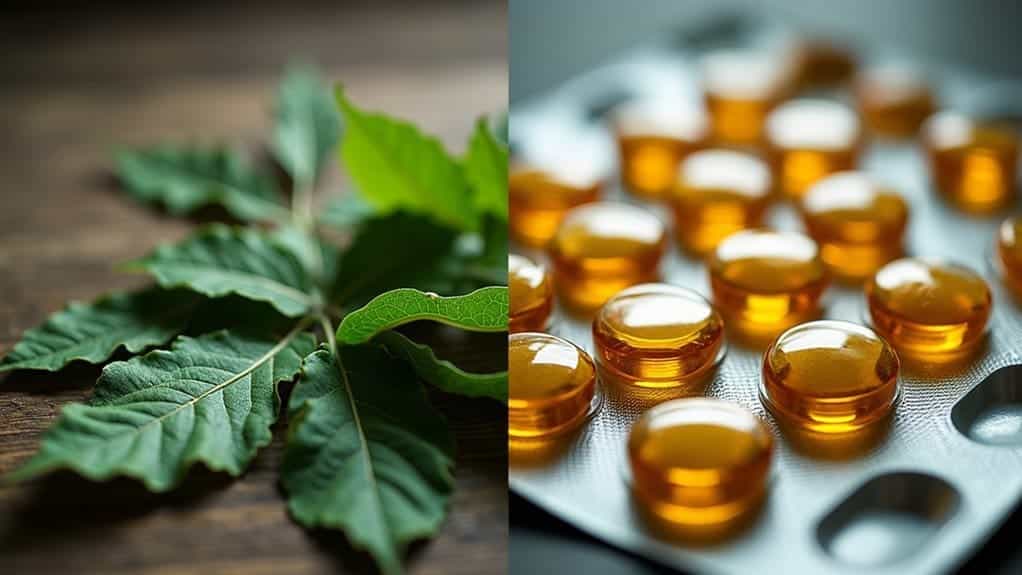
7-OH tablets represent a fundamentally different product category than traditional kratom preparations, and understanding these distinctions is critical for evaluating their dependence and misuse potential.
Traditional kratom products contain minimally processed leaf material with 40+ alkaloids working synergistically. In contrast, alkaloid extraction methods used for 7-OH tablets isolate or enrich a single compound, 7-hydroxymitragynine, that’s 30-40 times more potent at opioid receptors than full-spectrum preparations.
This potency differential fundamentally alters the risk profile. You’re consuming milligram-level doses of isolated 7-OH versus gram-level doses of balanced plant material. Formulation standardization in 7-OH tablets delivers precise, predictable amounts of this potent agonist, enabling rapid onset effects within 15-30 minutes. Natural kratom leaves contain only trace amounts of 7-OH, making the concentrated tablet form a dramatically more intense experience. Because extracting 7-OH directly from natural leaves is impractical, manufacturers produce it semi-synthetically via oxidation of mitragynine.
The result: profoundly sedating, opioid-like analgesia without the moderating influence of balancing alkaloids like paynantheine and speciogynine found in traditional kratom. This isolation removes the entourage effect that may buffer or moderate the impact of individual alkaloids when consuming full-spectrum leaf material.
The Pharmacological Profile Behind 7-OH Dependence Risk
Understanding why 7-OH tablets carry heightened dependence risk requires examining their receptor pharmacology. This metabolite binds μ-opioid receptors with 14-fold greater affinity than mitragynine and demonstrates high intrinsic potency, estimated 5-50 times stronger at central opioid targets. Despite its partial agonist profile, 7-OH produces robust euphoria and analgesia that drive compulsive use. Research confirms that cytochrome P450 3A isoforms mediate the conversion of mitragynine to 7-hydroxymitragynine, making metabolic variation a key factor in individual dependence susceptibility. The FDA has recognized these dangers and taken steps to restrict the sale of 7-OH and push for its scheduling under the Controlled Substances Act.
| Pharmacological Factor | Dependence Implication |
|---|---|
| High MOR affinity (low nM Ki) | Rapid receptor engagement, strong reinforcement |
| Biased signaling (G-protein preference) | Altered tolerance development patterns |
| Long terminal half-life | Sustained receptor occupancy, accumulation |
| Conversion to pseudoindoxyl | Fentanyl-approaching potency amplifies liability |
You’re facing a compound that combines potent reward signaling with pharmacokinetics favoring accumulation. This biased signaling profile doesn’t eliminate dependence risk, it reshapes how tolerance and withdrawal manifest clinically. Notably, 7-hydroxymitragynine exhibits 40-fold greater potency than mitragynine and tenfold greater potency than morphine in antinociception assays, underscoring its exceptional pharmacological strength.
Warning Signs of 7-OH Misuse and Withdrawal Symptoms

Recognizing misuse early can prevent progression to severe dependence, and five behavioral patterns consistently signal escalating 7-OH tablet problems. You’ll notice dose escalation, combining with other depressants, continued use despite adverse effects, preoccupation with obtaining supply, and inability to reduce intake without distress.
Craving patterns emerge within 6–24 hours of your last dose, accompanied by anxiety, muscle aches, and flu-like symptoms. Peak withdrawal occurs around days 1–3, bringing intense gastrointestinal distress, autonomic instability, and severe mood disruption. Because 7-OH is reported to be up to 13 times more potent than morphine in lab models, dependence can develop more rapidly than with traditional opioids.
Psychological dependence often persists longer than physical symptoms. You may experience weeks of anhedonia, sleep disturbances, and cue-triggered cravings that heighten relapse risk during the 1–4 week post-cessation window. Watch for neglected responsibilities, mood swings between doses, and secretive behavior, these red flags warrant immediate clinical evaluation. These intense cravings and compulsive urges to use can persist long after the physical discomfort has subsided, making ongoing support essential for recovery. Commercially available kratom-derived products like 7-OH tablets may contain dangerous contaminants such as heavy metals and harmful bacteria, adding additional health risks beyond dependence concerns.
Public Health Data Revealing Rising 7-OH-Related Incidents
Because surveillance systems have only recently begun tracking isolated 7-hydroxymitragynine exposures, the emerging data paint a concerning picture of rapid escalation. The National Poison Data System recorded 53 human exposure cases involving 7-OH in just three months, with 24 classified as abuse-related. Among single-substance cases, 67% required healthcare facility treatment, and 35% experienced serious health problems.
Regional patterns reinforce these concerns. Missouri Poison Center documented a near-doubling of kratom and 7-OH reports from 2023 to 2025, reflecting changing user preferences and supply chain shifts toward concentrated formulations. Los Angeles County identified six fatal overdoses in adults aged 18–40, all involving alcohol co-ingestion. These products are widely accessible, sold in gas stations, smoke shops, and online venues without age verification or dosing guidance.
The FDA now classifies 7-OH as an emerging public health threat, acknowledging that current surveillance likely underestimates the true burden you’re facing. The potency of 7-OH is particularly alarming, as it acts on opioid receptors with 13 times the strength of morphine. CDC data from SUDORS found that among kratom-positive overdose deaths, fentanyl and fentanyl analogs were the most frequently identified co-occurring substances, underscoring the dangerous polydrug environment in which these products are consumed.
Regulatory Gaps and the Growing Availability of High-Potency 7-OH Products

Despite FDA’s classification of 7-hydroxymitragynine as an unapproved, unlawful opioid ingredient, concentrated 7-OH tablets and other high-potency formulations continue flooding retail markets through a significant regulatory gap. You’ll find these products in gas stations, vape shops, and online marketplaces, all accessible without age verification or medical oversight.
The current enforcement landscape remains fragmented. While Florida has enacted emergency bans, other states rely solely on public health advisories, creating uneven state level regulations that allow cross-border purchasing from weaker jurisdictions. Manufacturers exploit this patchwork system through evasive product reformulations, relabeling products to circumvent state definitions of kratom alkaloids. Notably, there are no confirmed fatalities from 7-OH alone, which some argue undermines the urgency for emergency scheduling measures.
Federal scheduling under the Controlled Substances Act remains pending, leaving high-potency tablets, gummies, and liquid shots legally ambiguous. The Drug Enforcement Administration holds final authority on scheduling and is currently reviewing the FDA and HHS recommendation. This regulatory limbo directly enables the proliferation of concentrated 7-OH products with documented abuse potential. The concern intensifies as fruit-flavored gummies and ice cream cones containing 7-OH prove appealing to children and teenagers, raising serious public health alarms about youth access to these potent opioid-like substances.
Real Help, Real Results Call Now
Frequently Asked Questions
Can Naloxone Reverse a 7-Oh Overdose Like It Does for Other Opioids?
Yes, naloxone can reverse a 7-OH overdose because 7-OH acts as a potent mu-opioid receptor agonist causing respiratory depression. However, you may need higher or repeated doses due to 7-OH’s high potency. The potential for adverse interactions with alcohol or benzodiazepines can complicate reversal, requiring additional interventions. You should also consider long term health consequences, as 7-OH’s duration may outlast naloxone, necessitating continued monitoring for re-sedation.
Is 7-Oh Legal to Purchase in My State Right Now?
You can’t legally purchase 7-OH as a supplement or food product in any state, it’s federally unlawful regardless of local scheduling. Legal status updates show California and Georgia actively enforce bans, with other states implementing purchasing restrictions. Despite this, you’ll find these products in gas stations and online through gray-market channels. Evidence indicates significant health risks, and pending DEA scheduling could make possession a federal crime. Check your state’s current enforcement status.
How Long Do 7-Oh Withdrawal Symptoms Typically Last After Stopping Use?
Your withdrawal duration varies based on individual risk factors like dosage, length of use, and overall health. Acute physical symptoms typically peak within 1–3 days and resolve within 4–7 days. However, you may experience subacute symptoms, fatigue, anxiety, and sleep issues, for 1–3 weeks. Some individuals develop post-acute withdrawal syndrome, with cravings, mood instability, and cognitive difficulties persisting for weeks to months. Medical supervision can considerably shorten and ease your recovery timeline.
Are Certain People More Susceptible to 7-Oh Dependence Than Others?
Yes, certain individuals face heightened vulnerability to 7-OH dependence. If you have a genetic predisposition, such as family history of opioid or substance use disorders, you’re at increased risk. Environmental factors also matter: untreated mental health conditions like anxiety or depression, prior substance use, and younger age increase susceptibility. You’re particularly vulnerable if you’re using 7-OH for self-medication or combining it with other sedatives, which compounds dependence potential extensively.
Can 7-Oh Use Show up on Standard Workplace Drug Tests?
Standard workplace panels don’t specifically target 7-OH, so you’ll likely pass routine screening. However, urine screening accuracy varies, and kratom alkaloids can occasionally trigger false positive results on opioid immunoassays. If your employer uses expanded panels or specialized kratom testing, detection becomes certain. Safety-sensitive industries, probation programs, and military settings increasingly add 7-OH to their protocols. You should assume any specialized or confirmatory testing will identify recent kratom use.