

Your shroom trip typically wears off between four and six hours after ingestion, though the comedown phase spans roughly two to four hours as psilocin clears your system. During this decline, you’ll notice visual effects fading first, followed by emotional intensity gradually softening. Your body metabolizes approximately 65% of psilocybin through urine within 15 hours, with psilocin’s half-life ranging from 1.23 to 4.72 hours. Understanding the factors that influence this timeline can help you navigate your experience more effectively.
How Long Does a Shroom Trip Last?

A typical shroom trip kicks off within 20 to 60 minutes after ingestion and lasts between 4 and 6 hours, though some experiences stretch to 8 hours depending on dose and individual metabolism. Understanding when shrooms wear off requires tracking distinct pharmacokinetic phases.
Peak intensity occurs between 1.5 and 3 hours post-ingestion, featuring the strongest visual and emotional effects. After this window, you’ll notice gradual decline. How long does it take for shrooms to wear off completely? Most users return to baseline within 6 hours, though residual sensations may persist.
Your shroom comedown time typically spans 2 to 4 hours as psychoactive effects diminish progressively. Some users experience lingering effects that persist into the next day, making full recovery time longer than the active trip itself. Effects arrive in waves throughout the experience, making the timeline variable rather than linear. The method of consumption significantly impacts timing, as mushroom tea kicks in faster than eating dried mushrooms, which can also influence when effects begin to subside. Factors like body composition and the specific dose consumed also play significant roles in determining how quickly the experience concludes.
Why Some Shroom Trips Last Longer Than Others

Several key factors account for why shroom trips vary in duration from person to person. Your dosage amount directly correlates with extended effects—consuming more than 5 mg of psilocybin produces longer-lasting hallucinogenic experiences compared to sub-perceptual microdoses.
Individual metabolic factors play a critical role in how your body processes psilocin, the active metabolite responsible for psychoactive effects. Your age, BMI, and kidney and liver function determine how efficiently you eliminate the compound from your system.
Consumption method also influences duration. Mushroom tea allows faster absorption than whole dried mushrooms, which require extended digestion. Additionally, species potency varies considerably among the 180+ psilocybin-containing varieties, creating distinct timelines even at equivalent doses.
What Your Body Feels When Shrooms Wear Off
As psilocin levels decline in your bloodstream, your body signals the shift through distinct physical markers. You’ll notice fatigue setting in as your system readjusts, often accompanied by muscle tension release and reduced appetite. Understanding how long until shrooms wear off helps you anticipate these sensations.
| Time Post-Peak | Physical Sensation | Intensity |
|---|---|---|
| 1-2 hours | Lingering tingling, nausea subsiding | Moderate |
| 3-4 hours | Fatigue onset, muscle relaxation | Mild |
| 6-8 hours | Brain fog, low energy | Residual |
How long to come down from shrooms varies, but physical normalization typically occurs within 24 hours. Some users report a mushroom afterglow—a period of mental clarity extending into the following day despite physical exhaustion.
Mental and Emotional Shifts as Shrooms Fade
While your body recalibrates its physical equilibrium, your mind undergoes its own parallel adjustment—one that often proves more unpredictable.
During the 3-6 hour decline phase, you’ll likely notice mood swings intensifying as psilocybin levels drop. Euphoria can shift abruptly to irritability, while sudden waves of nostalgia or vulnerability surface unexpectedly. If you’ve experienced paranoia during the peak, these feelings may resurface as the drug clears your system.
Emotional sensitivity heightens during this metamorphosis, amplifying unresolved feelings you’ve carried into the experience. You might notice emotional detachment or flatness replacing the intense connectedness of the peak phase.
However, many users report an afterglow of mental clarity emerging post-6 hours. This reflective state often promotes emotional relief and calm introspection as visuals fade, potentially extending into the following day.
How to Tell When Your Shroom Trip Is Ending
How can you recognize when psilocybin’s grip on your perception begins loosening? Visual distortions typically weaken around the three-hour mark post-ingestion, with enhanced colors and patterns gradually normalizing. You’ll notice time perception stabilizing as the characteristic temporal distortion fades. These sensory shifts indicate psilocin levels are declining, given its 1-3 hour half-life.
Physical markers provide reliable indicators too. Nausea and restlessness diminish first, followed by emerging fatigue as your body processes remaining metabolites. You’ll feel your baseline returning within 4-6 hours of onset.
The comedown spans roughly 2-3 hours post-peak, though higher doses extend this to 4-6 hours. While active effects conclude within 3-6 hours, mild physical sensations may persist up to 12 hours. Your metabolism, dosage, and stomach contents directly influence this timeline.
The Shroom Afterglow: What to Expect the Next Day
The morning after a psilocybin experience often brings what researchers term the “afterglow”—a window of positive residual effects that extends well beyond the trip’s pharmacological endpoint. You’ll likely notice enhanced mood, increased empathy, and mental clarity persisting 12 to 24 hours post-experience. Many users report continued emotional openness and meaningful insights that integrate over subsequent days.
However, you should anticipate potential challenges during this period. Some individuals experience mood fluctuations, anxiety, sleep disturbances, or vivid dreams. Physical effects like headaches or fatigue occasionally occur as your body returns to baseline.
Several factors influence your afterglow quality: dosage intensity, individual metabolism, pre-trip mental state, and post-trip self-care. Proper hydration and adequate rest help mitigate negative residual effects. Most users achieve full baseline restoration within 8 hours, though subtle after-effects may linger longer.
Can You Make Shrooms Wear Off Faster?
Beyond the afterglow period, many users wonder whether they can actively shorten a psilocybin experience that’s become uncomfortable or simply lasted long enough. The pharmacological reality is straightforward: no established clinical methods exist to considerably accelerate psilocybin metabolism.
Once psilocybin converts to psilocin in your system, you’re working within a biological timeline. Psilocin’s half-life of 1 to 3 hours remains consistent regardless of intervention attempts. While adequate hydration may marginally support metabolic processing, evidence isn’t definitive. Physical exercise post-ingestion hasn’t been proven to notably speed clearance rates.
Your liver function and individual body chemistry primarily determine how efficiently you process these compounds. Concurrent medications may interact with metabolism unpredictably, but medical interventions to halt effects aren’t standard practice. The natural 4-to-6-hour metabolic timeline operates independently of most external factors you might try.
How Long Shrooms Stay in Your System
Even after shrooms wear off, traces remain detectable in your body through various testing methods. Your system converts psilocybin into psilocin within minutes of ingestion, and both compounds clear through your kidneys relatively quickly—typically becoming undetectable in urine within 24 to 48 hours for most users. Detection windows vary based on the specific test used, with urine screening being most common but least reliable due to psilocin’s short half-life.
Detection Window by Test
How long psilocybin remains detectable depends entirely on the testing method used. Standard 5-10 panel drug screens don’t include psilocybin, so you’d need specialized testing to identify its presence.
Urine tests detect psilocybin or psilocin up to 24 hours post-ingestion, with advanced panels extending this window to 48 hours. Your body excretes approximately 65% of psilocybin through urine within 15 hours.
Blood tests offer a 12-24 hour detection window but are rarely utilized due to invasiveness and cost. Saliva testing captures psilocin within 12-24 hours, though detection can begin just 30 minutes after ingestion.
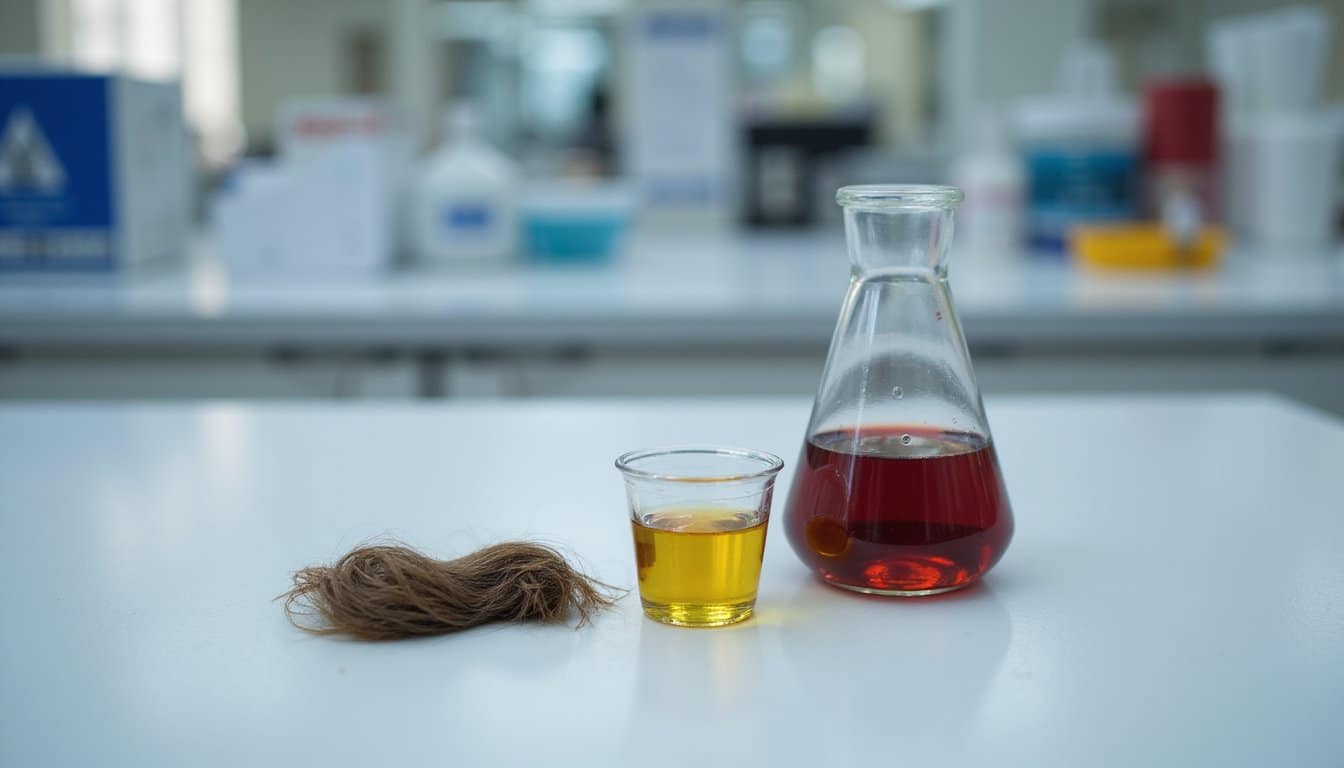
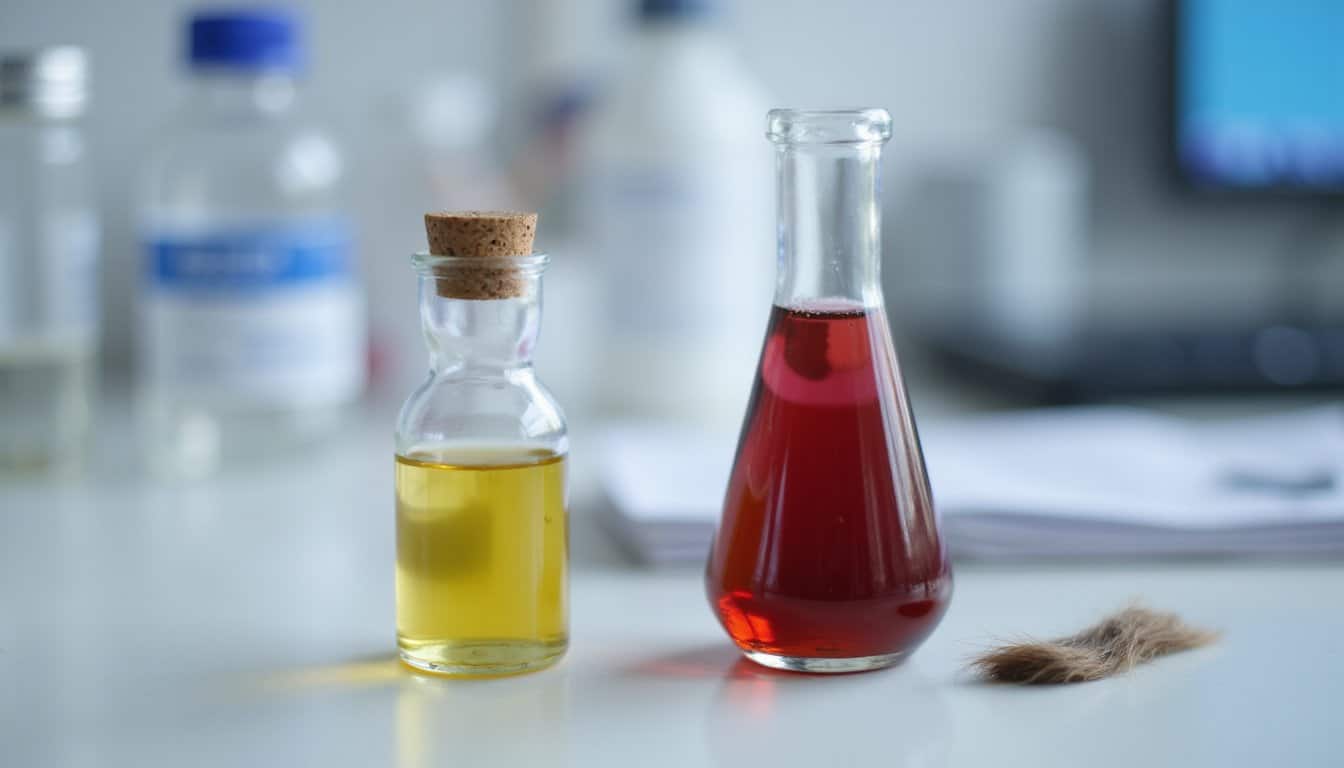
Hair follicle analysis provides the longest window—up to 90 days—but remains uncommon due to expense. These specialized tests require advanced methods like GC-MS or HPLC, typically reserved for forensic or legal circumstances.
Psilocybin to Psilocin Conversion
Your body doesn’t actually use psilocybin directly—it functions as a prodrug that requires conversion to its active form, psilocin, before producing psychoactive effects. This transformation occurs rapidly in your liver, where alkaline phosphatase enzymes cleave the phosphate ester bond from psilocybin’s molecular structure.
The dephosphorylation process happens primarily before systemic absorption, allowing psilocin to cross your blood-brain barrier efficiently. Near-complete conversion occurs post-ingestion, with psilocin reaching peak plasma concentrations approximately two hours after you consume mushrooms.
Once converted, psilocin exhibits a half-life ranging from 1.23 to 4.72 hours, with terminal half-life increasing at higher doses—3.1 hours at 0.3 mg/kg versus 4.2 hours at 0.6 mg/kg. Your liver function, BMI, and dose size all influence how quickly you’ll metabolize and eliminate these compounds.
Begin Your Path to Recovery Today
If you or someone you love is struggling with psilocybin addiction, you do not have to face it alone. At Destiny Recovery Center, we provide comprehensive Detox Treatment Programs that fit your needs and support your path to lasting recovery. Call (909) 413-4304 today and let us help you take back control of your life.
Frequently Asked Questions
Is It Safe to Drive Once the Visual Effects Have Stopped?
No, you shouldn’t drive once visual effects stop. Your cognitive impairment extends well beyond faded visuals—reaction times remain slowed, motor coordination stays compromised, and time perception distortions persist during the comedown phase (hours 4-8). Psilocin remains detectable in your system up to 24 hours, continuing to affect judgment. You’ll want to wait a minimum of 6-8 hours post-ingestion, though waiting 24 hours guarantees complete psilocin clearance for ideal safety.
Can Eating Food During the Comedown Help You Sober up Faster?
No, eating food during the comedown won’t help you sober up faster. Once you’ve absorbed psilocybin, your body metabolizes it at a fixed rate regardless of what you consume afterward. There’s no evidence that eating accelerates the elimination of psilocybin or its active metabolite, psilocin, from your system. While food might provide comfort or restore energy, it doesn’t pharmacologically shorten the duration of psychoactive effects during the comedown phase.
Why Do Some People Feel Worse During the Comedown Than the Peak?
You may feel worse during the comedown because your brain’s serotonin system is rebalancing after psilocybin’s surge. As the compound clears, you lose the peak’s euphoric distraction, exposing underlying emotional states more starkly. Your neurochemistry shifts from heightened activation to relative depletion, causing fatigue, mood dips, and irritability. If you’ve had a challenging peak experience, unresolved psychological material can intensify during this phase when cognitive defenses return without the compound’s buffering effects.
Should You Take Melatonin or Sleep Aids After Shrooms Wear Off?
You should wait at least 6-8 hours post-ingestion before considering melatonin or sleep aids. Psilocin remains detectable up to 24 hours and continues stimulating serotonin receptors, which can disrupt sleep regulation. Since melatonin influences serotonin pathways, combining them risks amplifying aftereffects or prolonging the afterglow. No direct studies confirm safety, so opt for natural approaches first—hydration, a calm environment, and light activity—before introducing any sleep aids.
Is It Normal to Feel Emotionally Numb When Shrooms Start Fading?
Feeling emotionally numb during the come-down isn’t typical. Psilocybin actually increases your amygdala’s response to emotions, often creating heightened emotional processing rather than blunting. You’re more likely to experience lingering emotional intensity than numbness. Some people report mild physical numbness alongside tremors or perspiration, but emotional disconnection contrasts psilocybin’s known mechanism. If you’re experiencing significant emotional flatness, consider whether other factors—like concurrent medications or psychological state—might be contributing.